Cleaques Bookings
A marketplace for trip planning and instant service booking across verified vendors, supported by a structured admin system.
Role
Product Designer
Industry
Travel & Hospitality
Duration
6 months

OVERVIEW
Travel booking was fragmented across different tools, messaging apps, and informal vendor coordination. Users struggled to plan full trips in one place, while vendors had no reliable system to manage listings, bookings, or payments.
I designed Cleaques Bookings as a unified marketplace connecting users, vendors, and admins into a single system across web and mobile.
The goal wasn’t just to “combine booking flows”, but to reduce operational breakdowns between planning, booking, and vendor management.
What This System Enables
Reduced booking fragmentation by consolidating trip planning and service booking into one flow
Introduced verified vendor onboarding to reduce unreliable listings and manual trust checks
Replaced informal vendor coordination with structured booking, payment, and payout workflows
Created a centralized admin system to handle disputes, approvals, and platform control
PROBLEM
Existing booking platforms broke down when scaled beyond simple reservations.
In this system, three separate failures showed up:
Users
Jumped between platforms to plan trips
Could not reliably compare or coordinate multiple services in one flow
Dropped off during planning due to too many disconnected steps
Vendors
Managed bookings manually through chat and external tools
Had no consistent structure for availability, pricing, or payouts
Faced trust issues without verification or platform guarantees
Admins
Had no unified system to control listings, disputes, or payments
Were forced into reactive decision-making instead of structured workflows
The core issue wasn’t UI. It was lack of operational structure between three user types.
MY ROLE
I owned the end-to-end product design work across user, vendor, and admin systems over the course of the project.
My work included:
Mapped end-to-end booking flows across user, vendor, and admin journeys to identify breakdown points in the system
Worked with engineering to align on implementation constraints for workflows and system logic
Iterated designs based on usability testing and internal stakeholder feedback

SOLUTION
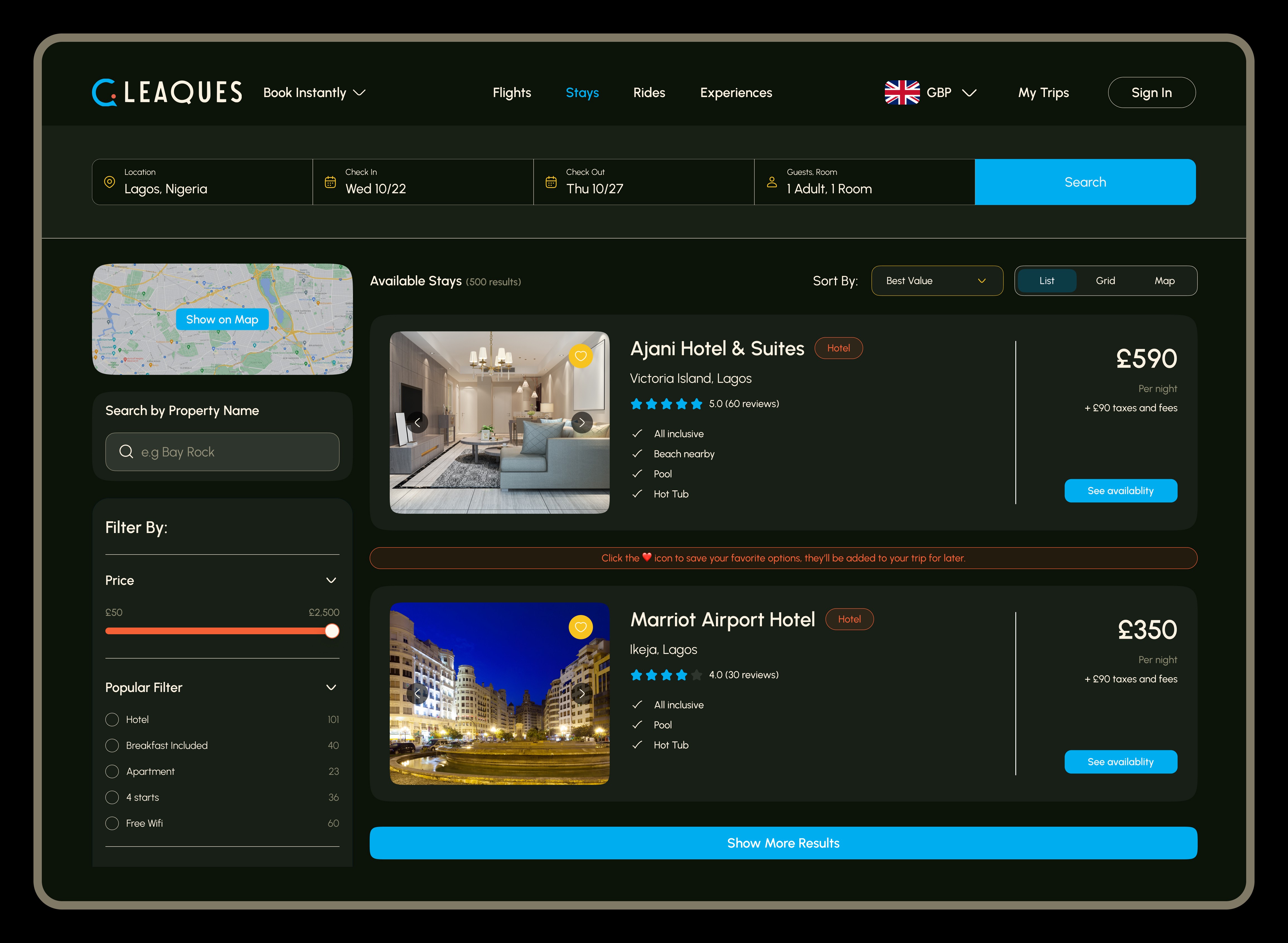
Instead of building a “booking app”, I designed a controlled marketplace system with enforced structure across all actors.
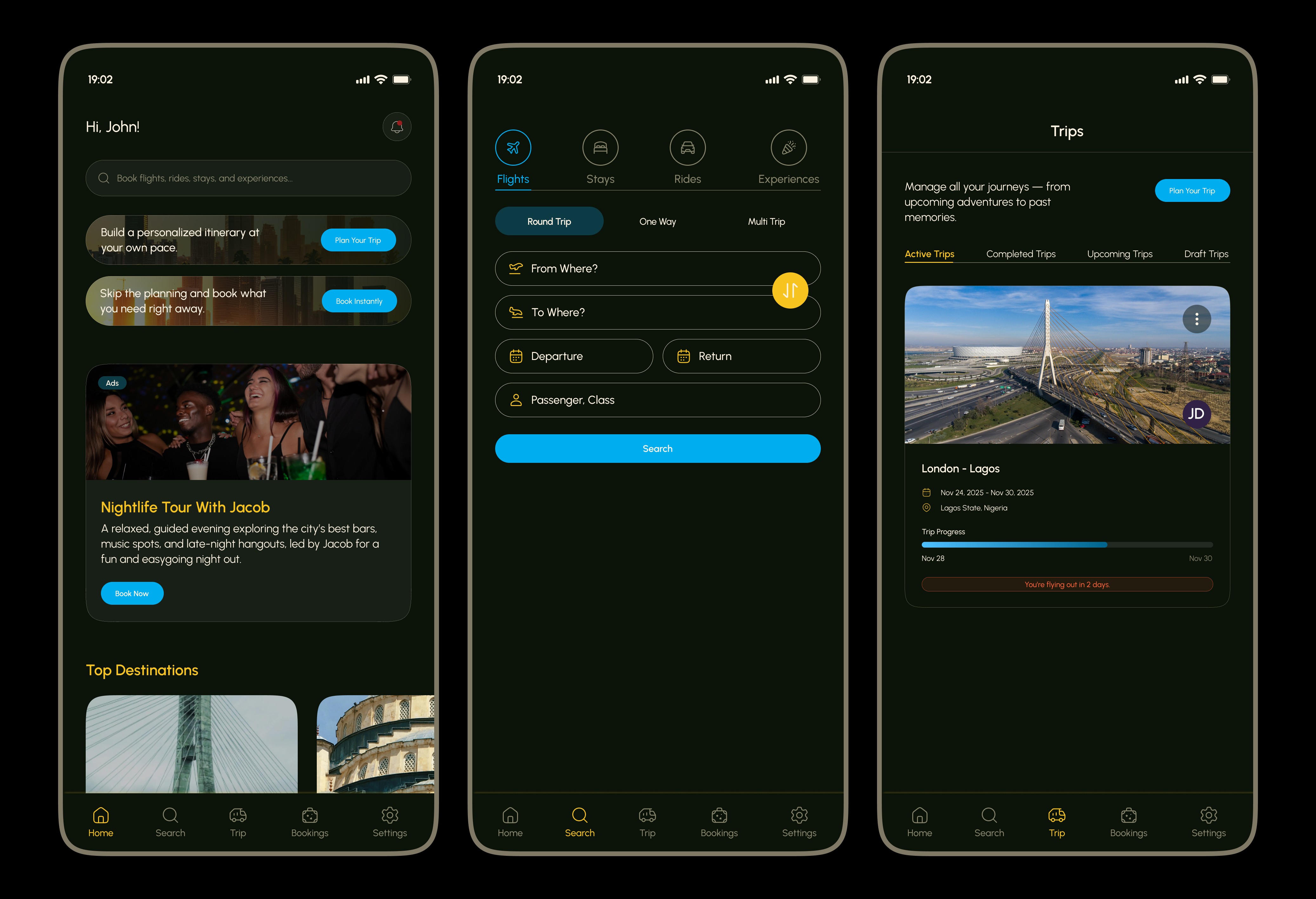
1. USER EXPERIENCE (Web + Mobile)
During testing, users struggled most with deciding what to book and in what order. A direct search model created too many dead ends.
I introduced two core paths:
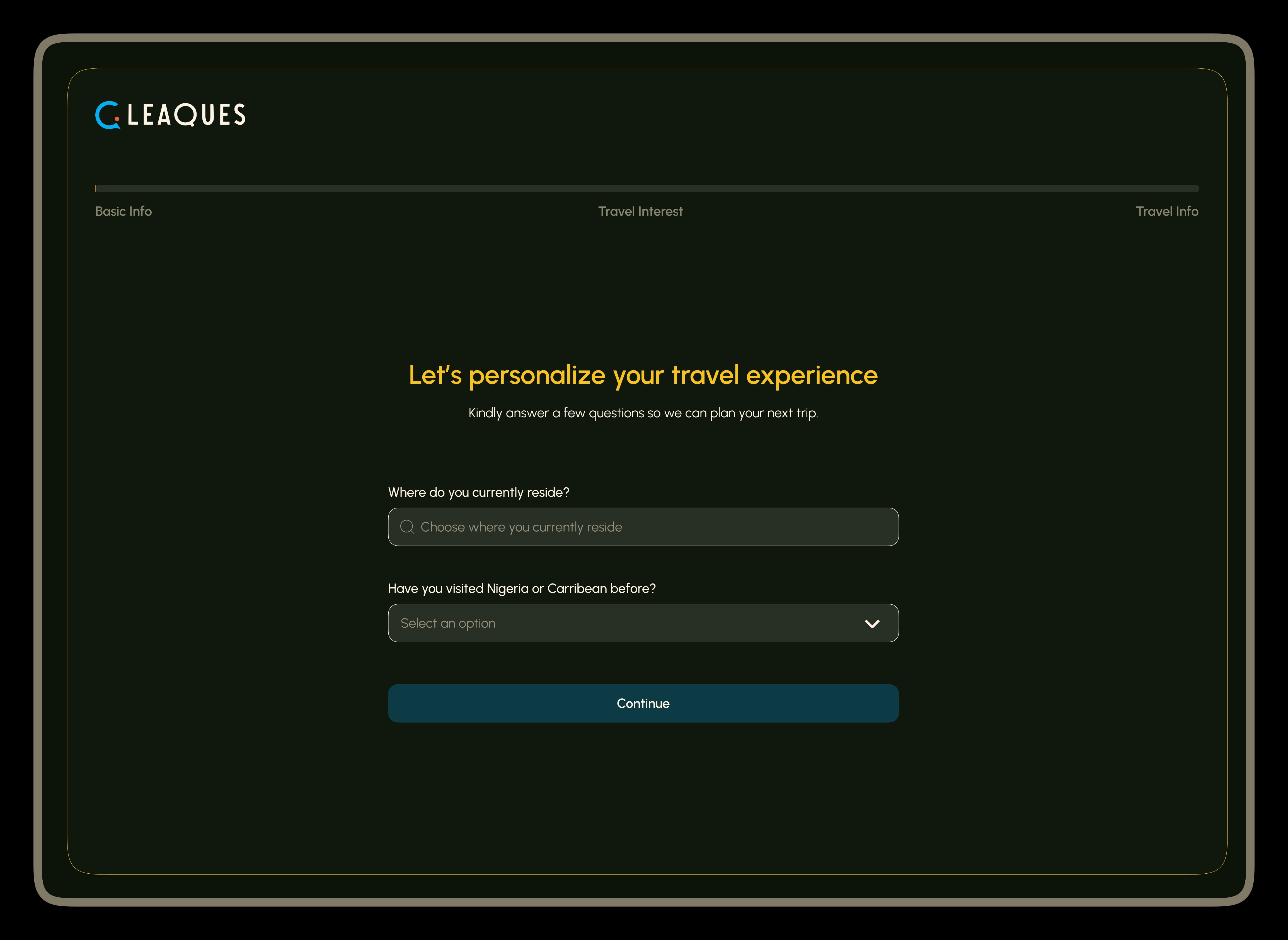
Guided trip planning flow
A structured flow that breaks trip planning into small decisions (destination, budget, timing, service type)
→ reduces decision fatigue during early-stage planningInstant booking mode
A shortcut flow for users who already know what they want
→ avoids forcing structured planning when unnecessary
Users can manage bookings, itineraries, and payments across devices once a trip is created.
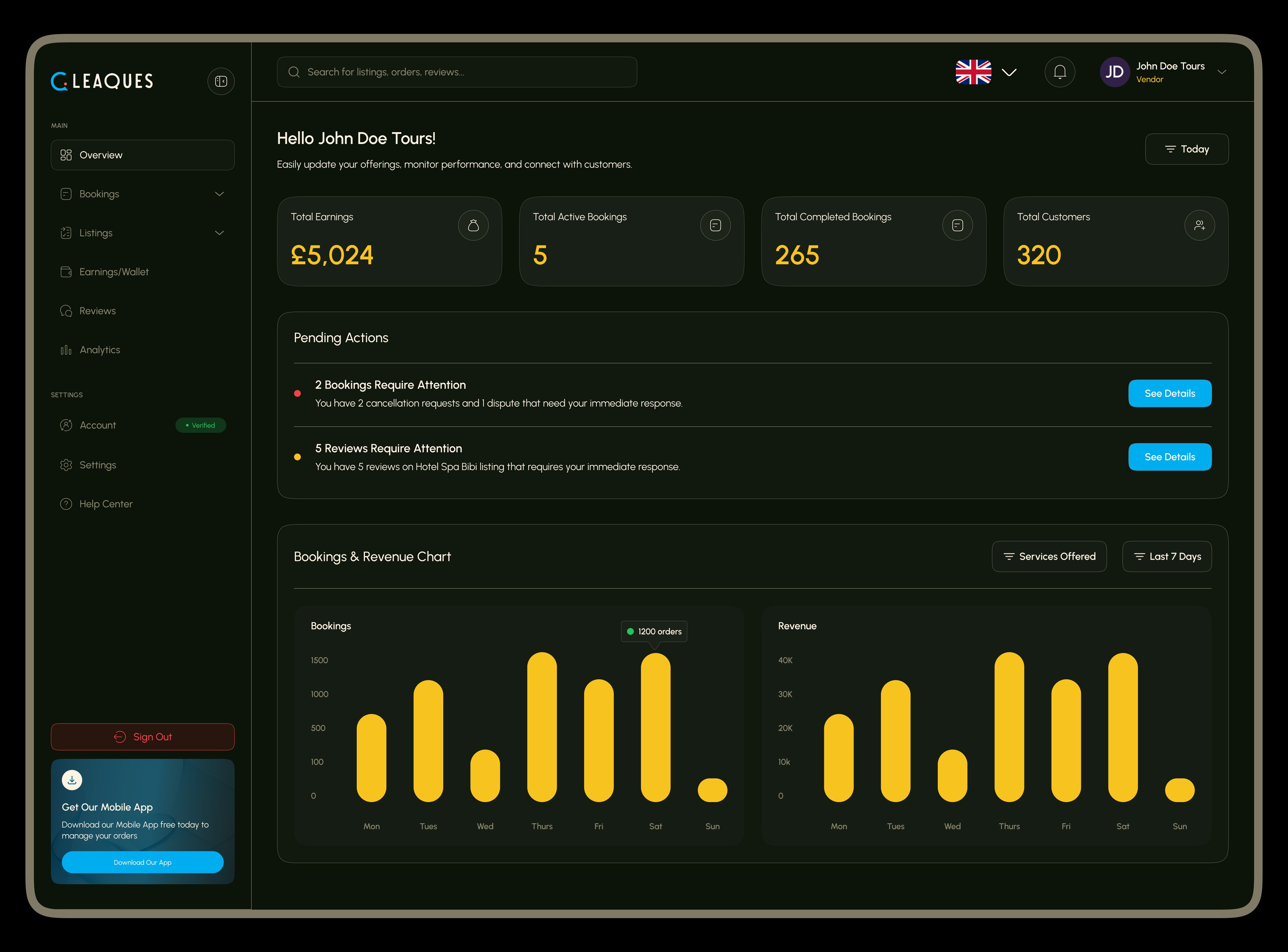
2. VENDOR SYSTEM
The biggest risk area was vendor reliability and inconsistent service quality.
Instead of open listings, I introduced a controlled onboarding model:
Vendors must pass verification before listing anything
Listings go through approval before appearing publicly
Earnings are tracked per booking, not manually calculated
Payouts are delayed until service completion to reduce disputes
This introduced friction, but it was necessary to prevent platform breakdown at scale.
3. ADMIN SYSTEM
Early versions of the system showed a clear problem: admins were reacting to issues instead of controlling the system.
I designed an admin layer that turns operations into structured workflows:
Vendor approvals (not ad-hoc decisions)
Listing moderation with clear states (pending / approved / rejected)
Booking oversight with dispute resolution flows
Payment and refund management tied to booking lifecycle
Analytics for platform health and vendor performance
Role-based access to prevent uncontrolled admin actions

HOW I APPROACHED THE PROBLEM
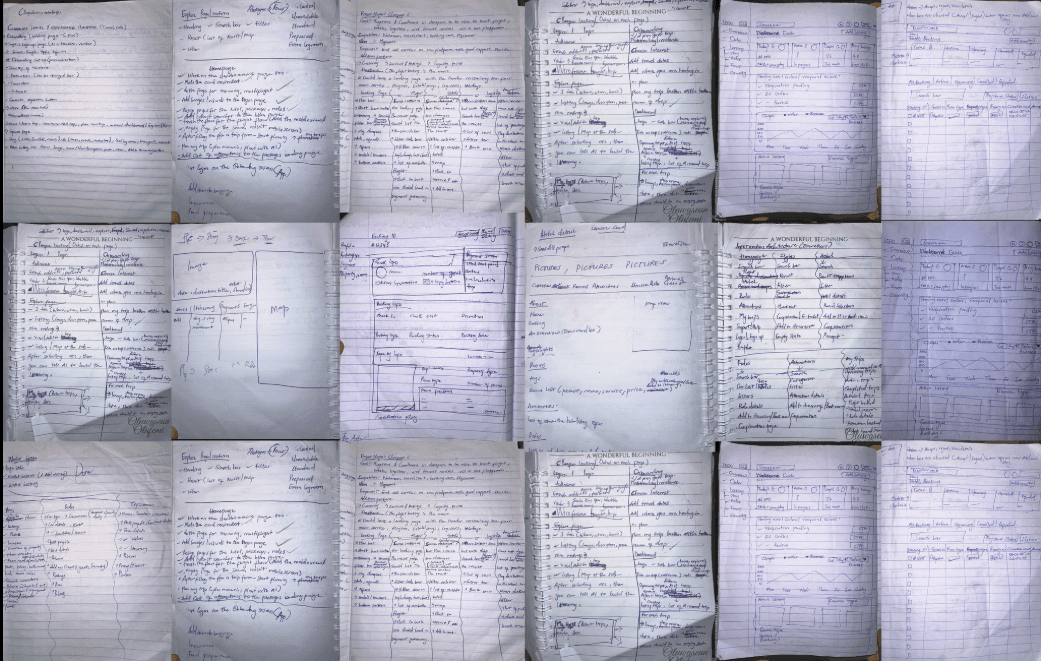
I started by mapping how trip planning actually happens outside booking platforms. Most users were not “searching”, they were assembling fragmented information across social media, chats, and multiple sites.
The main insight: users don’t think in bookings, they think in tasks and steps.
From this, I defined three constraints:
Planning must support both structured and unstructured behavior
Vendor actions must be controlled to prevent platform fragmentation
Admin actions must be system-driven, not reactive
During design, key friction points emerged:
Users abandoned early planning flows when too many steps were introduced, so I reduced the guided flow to minimal decision points with skip options
Vendors resisted strict onboarding at first, so verification was simplified into staged approval instead of a single heavy review step
Admin workflows were redesigned after initial complexity made moderation too slow
I iterated through Figma prototypes, validated flows with usability testing, and adjusted structure based on failure points rather than assumptions.
OUTCOMES
The final system functions as a structured marketplace rather than a simple booking interface.
Key system changes introduced:
Two-path booking system (guided planning vs instant booking) that supports different user intent levels
Vendor verification pipeline that prevents untrusted listings from entering the platform
Booking lifecycle tied directly to payments and payouts to reduce disputes and manual handling
Admin system structured around state-based workflows instead of manual decisions
Unified control over listings, pricing rules, and promotions


KEY TAKEAWAYS
The specific challenge with Cleaques was that three user types, each with completely different goals, had to interact through the same system without breaking each other's workflows. A user abandoning a booking, a vendor with an unverified listing, and an admin making ad hoc decisions all lead to the same downstream failure: platform distrust.
The design solution wasn't a feature. It was an enforced state, making sure every actor in the system could only do what the platform allowed at each stage.
Other projects

Cleaques Sports
A digital platform connecting street football players, clubs, scouts, and fans through competitions, player discovery, live streaming, and creator monetization.
Talentrah
Expanding an AI-powered job platform into a dual-role hiring marketplace.

Study Befikar
Redesigning a study abroad consultation platform for clarity, hierarchy, and usability